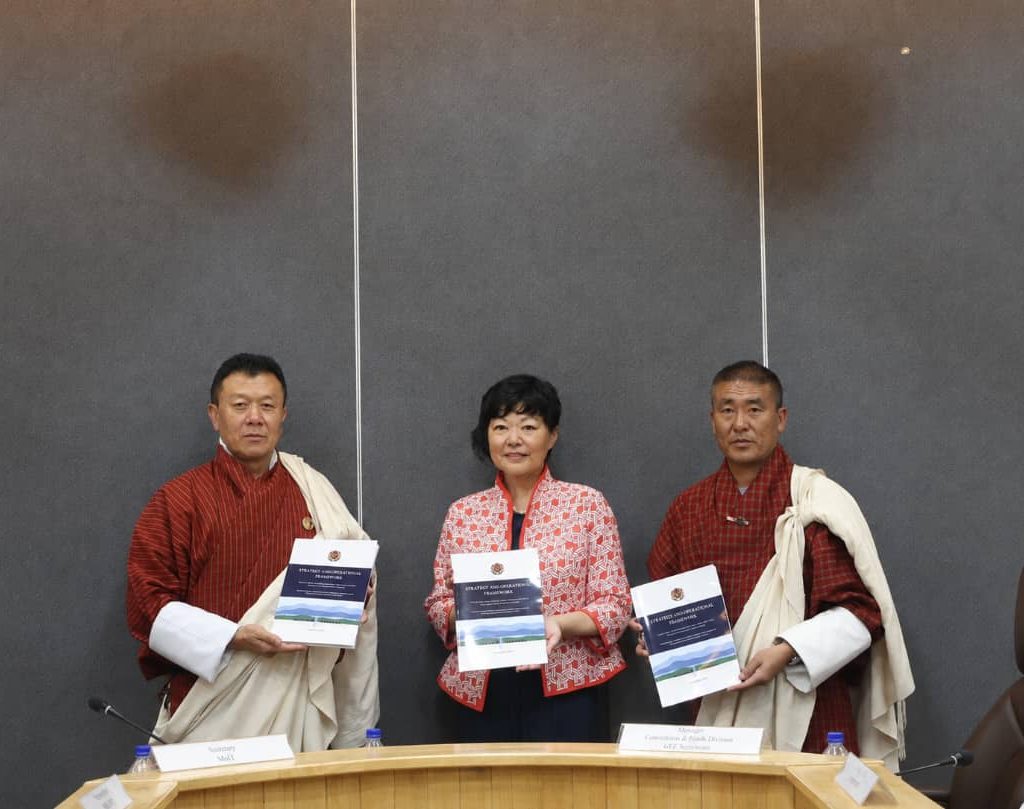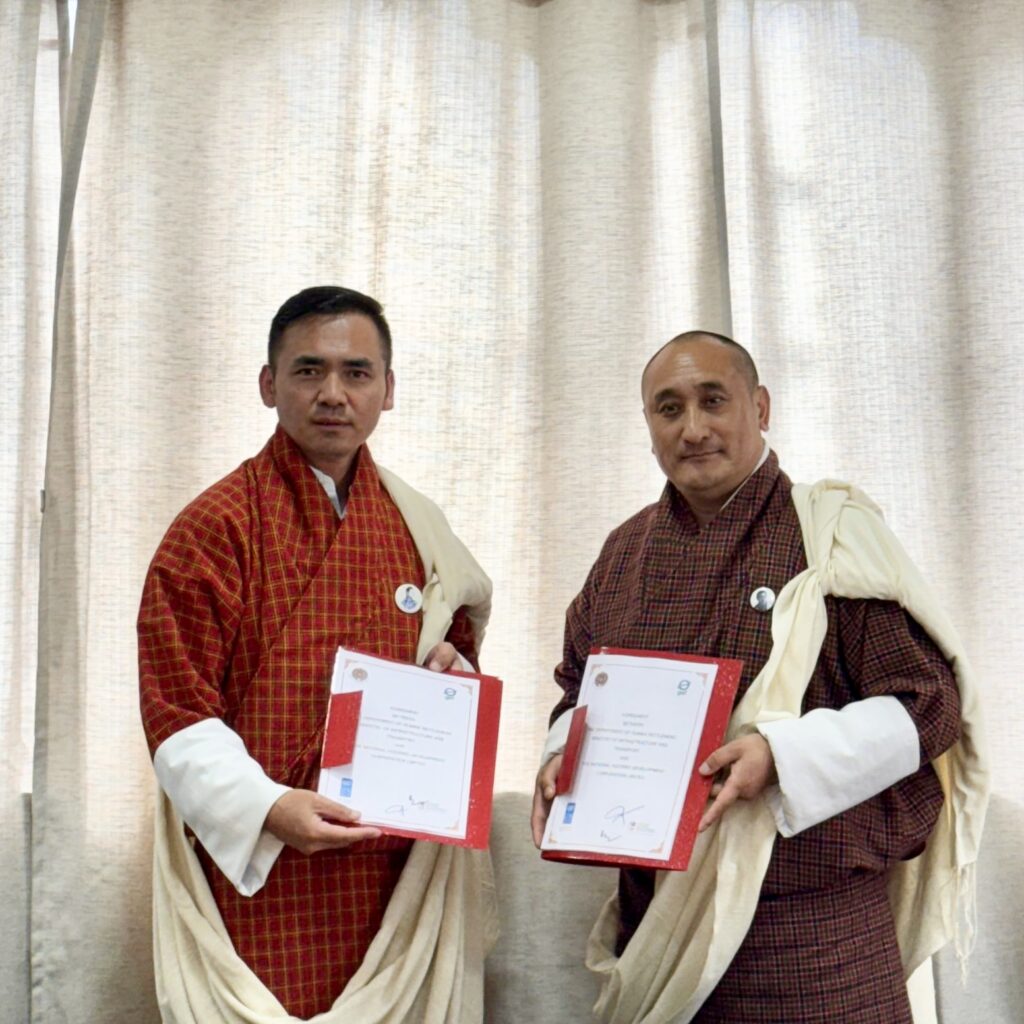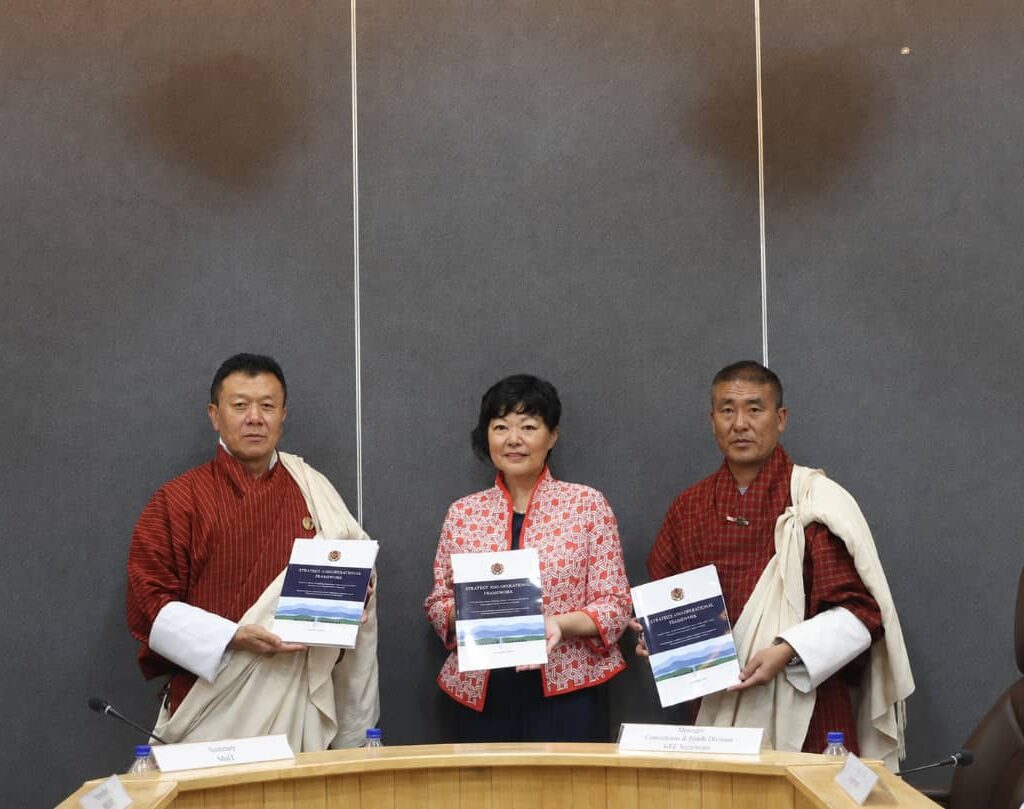
The Ministry of Infrastructure and Transport, Royal Government of Bhutan, in collaboration with the Global Environment Facility (GEF) and the United Nations Development Programme (UNDP), today launched the Strategy and Operational Framework for Inter-Agency Coordination and Policy Coherence for Climate-Resilient Urban Planning and Development in Thimphu.
The Framework was developed under the Enhancing Climate Resilience of the Urban Landscapes and Communities in Thimphu–Paro Region (ECRUL) Project, with financial support from the GEF. It provides a practical approach to strengthening inter-agency coordination, improving policy coherence and supporting more integrated and climate-responsive approaches to urban planning and development in Bhutan.
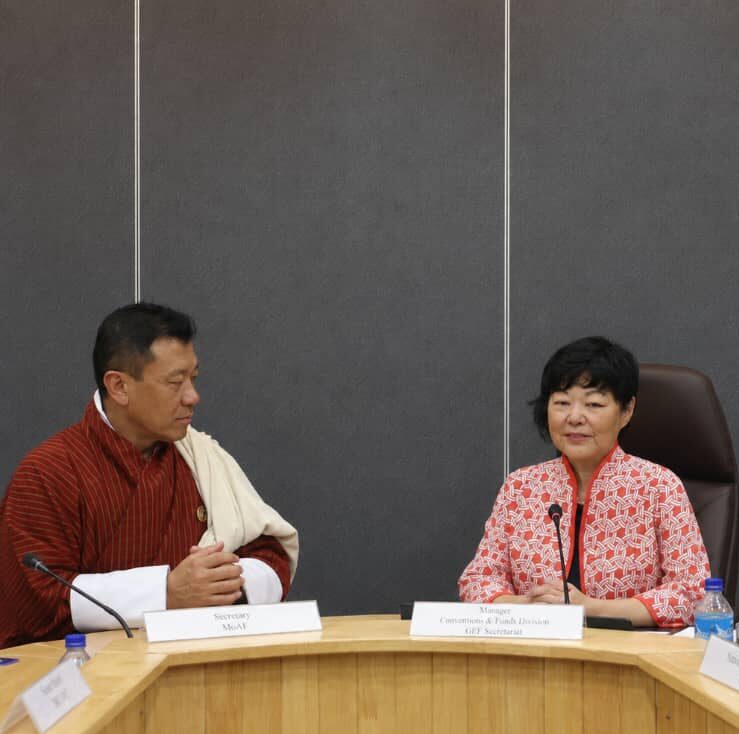
The launch event was graced by Hon’ble Secretary Karma Wangchuk, Ministry of Infrastructure and Transport; Ms. Chizuru Aoki, Manager, Conventions and Funds Division, GEF Secretariat; and representatives from the UNDP.
While Bhutan has made significant progress in setting strategic directions for urban development, implementation continues to face institutional and coordination challenges. Fragmented mandates, overlapping functions, regulatory gaps and limited coordination among agencies have made it difficult to translate strategic priorities into coordinated action.
These challenges are particularly important in the Thimphu–Paro region, which accommodates approximately one quarter of Bhutan’s urban population and contributes more than 40 percent of the national GDP, while facing growing exposure to flash floods, seasonal water scarcity and forest fires.
The Framework was developed through a participatory and evidence-based process, including bilateral consultations with government agencies, focus group discussions and a series of multi-stakeholder workshops, involving 20 Dzongkhags, three Thromdes, five national ministries, autonomous agencies, academia, civil society and the private sector. The underlying assessment reviewed existing mandates, functions and coordination mechanisms, and identified key gaps, overlaps and inconsistencies, with particular attention to climate resilience, gender equality and inclusion.
The Framework is intended as a practical pathway for translating national urban development priorities into coordinated implementation. It is an operational instrument that clarifies institutional responsibilities, strengthens coordination mechanisms, improves access to spatial information and integrates climate and gender considerations into planning processes.
The launch marks an important step towards strengthening the governance and institutional foundations for inclusive, sustainable and climate-resilient urban development in Bhutan. It is expected to provide a common direction for government agencies and other stakeholders, promote greater coherence between policies and plans, and support more effective implementation of urban development priorities, particularly within the rapidly developing Thimphu–Paro region.